
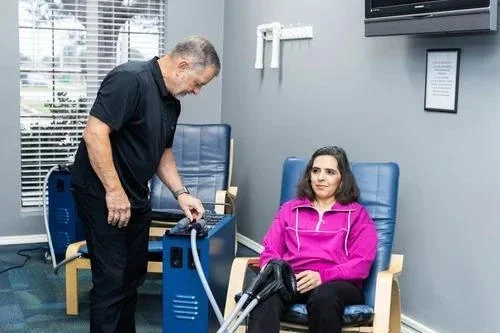
Walking should not require a plan for every step. Yet a sore knee, stiff hip, or painful ankle can make an ordinary trip across the room uncomfortable. A chiropractor for joint pain may help when movement problems, muscle tension, or changes in body mechanics contribute to discomfort. Before choosing treatment, however, we need to identify what is causing the pain and whether chiropractic care is appropriate.
Effective chiropractic care for joint pain starts with more than identifying which joint hurts. We need to consider how the body moves, where discomfort begins, and what makes it worse. A joint pain chiropractor may be one part of a broader approach to improving mobility, but chiropractic treatment is not a cure for arthritis or every condition affecting the joints.
Why Can Joint Pain Make Walking Difficult?
A number of joints and muscle groups must function together to produce walking. The hips contribute to moving and stabilizing the legs, the knees absorb forces, and the ankles and feet allow for forward movement. If one part of our body gets stiff or hurts, we may shorten our step, move our weight, or adjust our body position to make it less uncomfortable.
Such changes can result in extra stress. A protective brace on a painful joint can cause surrounding muscles and joints to become overworked. Many conditions, like arthritis, old injuries, and irritation of the tendons, inflammation, overuse, and weak muscles, can affect walking. In some instances, pain around a joint can also affect the low back or be a result of disturbed nerves.
This makes a big difference to daily living. In 2023, 24.8 million U.S. adults with diagnosed arthritis reported activity limitations, according to a CDC study. This was 47.8% of all adults who had arthritis. Mobility issues may be a problem with going about daily activities, work, exercise, and leaving home. If walking is a problem, it's a problem.
Can Chiropractic Care Help Make Walking More Comfortable?
It may be beneficial for some individuals suffering from discomfort due to musculoskeletal issues that are treatable through physical intervention, guidance in movement, or rehabilitation. When assessing a problem, we can look at the movement of the spine, its posture, how the other muscles around it are working, and how things are moving.
But hands-on treatment should not be considered as a sole treatment for arthritis. For hip or knee OA, NICE guidance suggests that manual therapy should only be considered with therapeutic exercise. Also, it states that there is not enough evidence to support manual therapy conducted as a single treatment for the condition. This underlines the importance of using the right physical care and movement/stability exercises.
What Happens During a Joint Pain Evaluation?
It is important to understand when the pain or discomfort starts. Does it start when starting short distances, come on when walking for longer distances, or get worse when going up the stairs? See if there is swelling, stiffness, numbness, instability, or a recent injury. This information can be used to assist decision-making on whether chiropractic care might be appropriate or whether other evaluation would be more appropriate.
We also take into account health history, past injuries, activity levels, and personal objectives. A comprehensive consultation and chiropractic exam provide a guide to the next steps. X-rays should not be routinely ordered for all patients but should be ordered as clinically indicated. The care plan should be based on the examination and what is found, not what it is assumed is causing pain.
What May an Individualized Care Plan Include?
It's based on the nature of the pain and the patient's tolerance for movement. As needed, chiropractic treatment can involve chiropractic adjustments using techniques like Gonstead, Diversified, Activator, or motion-assisted chiropractic adjustments. For some soft tissue issues, Active Release techniques might be considered. These are not effective in repairing joint damage or as a substitute for treatment of inflammatory conditions.
Rehabilitation and balance training can also help individuals who have reduced activity due to discomfort. Can work on strengthening, co-ordination, and managing movement. Slowly ramping up appropriate activity instead of remaining inactive indefinitely could be more beneficial. Exercise and activity modifications should be appropriate to the individual's condition, and should never push past their level of sharp or worsening pain.
Could the Pain Be Coming From Somewhere Else?
Yes, sometimes the pain at the knee is a result of abnormalities in the hip, lower back, or surrounding soft tissues. Pain in the ankle area can impact the distribution of weight in the foot and leg. Nerve irritation can also lead to pain, tingling, or weakness in the joint that can be confused for a joint issue.
This is why you shouldn't take the painful area as your only indicator. A wider evaluation can be used to help identify movement issues and whether referral or further testing is necessary. If the pain is sudden and severe, the joint is hot or red, it is swollen, the person has a fever, cannot bear weight, or develops pain after a major injury, it is important that medical help is sought immediately. Symptoms that persist or recur in the joint(s) should also be evaluated medically.
How Should We Measure Progress?
A realistic care plan focuses on everyday function rather than promising that pain will disappear. Useful signs of progress may include walking farther before discomfort begins, standing more comfortably, climbing stairs with greater confidence, or returning to routine activities. Results vary according to the underlying condition, overall health, and consistency with recommended care.
For people considering chiropractic care for joint pain in Owasso, Standridge Clinic offers chiropractic adjustments using Gonstead, Diversified, Activator, Active Release, and motion-assisted techniques. Its services also include rehabilitation and balance training. The clinic's process begins with a consultation and examination before care recommendations are discussed. Standridge Clinic can help determine whether its services are appropriate for a patient's concerns or whether another medical evaluation should come first.
Frequently Asked Questions
-
It may improve comfort and movement when symptoms involve joint mechanics or surrounding soft tissue.
-
Osteoarthritis, overuse, tendon irritation, past injuries, inflammation, and muscle weakness can make weight-bearing movements painful.
-
A plan may address stiffness, movement restrictions, tension, and strength deficits affecting joint function overall.
-
Hands-on methods may ease movement restrictions, while rehabilitation exercises help build strength and support activity.
-
Get medical advice for persistent pain, difficulty walking, swelling, warmth, redness, or restricted joint movement.
-
Care depends on the cause; movement issues may improve, while arthritis or injuries require broader management.
