
What Is a Chiropractic Adjustment?
into static and unnatural postures. Whether you sit at a desk for hours, or you do repetitive physical work all day, your spine ends up taking on that built-up strain. And when your spine drifts out of its natural alignment, your whole nervous system can end up feeling it too. Chronic discomfort is often the body’s way of telling you it needs support, which is why a chiropractic adjustment gets mentioned so much as a reliable route back to comfortable, smooth movement.
Recent findings from the Georgetown University Health Policy Institute suggest that nearly 65 million Americans have reported a recent back pain episode, and a large number deal with chronic day-to-day limitations. That’s a pretty big sign of how necessary effective, non-invasive musculoskeletal care really is. In our practice, we aim to tackle those structural imbalances directly at their source. With a personalized chiropractic adjustment, we work toward restoring ideal joint performance, so your body can support its own healing, without leaning on short-lived patch-ups.
What Is a Chiropractic Adjustment?
A chiropractic adjustment is a controlled, precise procedure where a trained professional uses manual force on a specific spinal joint. The main purpose is to improve alignment and strengthen your physical performance. When spinal joints become restricted or drift out of place, they may start irritating the nearby nerves, and that can show up as localized stiffness, pain, and reduced range of motion.
Our process is about zeroing in on the exact spots where joint function is off. Then, with a quick, accurate thrust, we help the joint return to its proper positioning. This mechanical correction can ease pressure on the nervous system, which often helps your muscles, ligaments, and nerves to function in harmony. The goal is not just to make something “pop,” but to:
Improve joint mobility
Reduce nerve irritation
Decrease pain and muscle tension
Improve overall movement and function
Adjustments can be performed using the chiropractor’s hands or specialized instruments, depending on the patient’s condition, comfort level, and clinical needs.
Why Might You Need an Adjustment?
Spinal misalignment does not always show up from some sudden trauma. It can come on slowly, over time, from poor posture, repetitive motions, or even emotional stress that keeps turning into chronic muscle tension. When your joints end up restricted, your body tends to compensate by shifting weight and changing movement patterns, and that can cause a secondary strain in other muscle groups, kind of like a chain reaction, you know.
You might want a chiropractic adjustment if you’re dealing with chronic headaches, neck tightness, lower back discomfort, or you notice you just can’t move through your range of motion the way you used to. Getting proper joint mechanics back on track helps limit premature wear and tear on your joints, can lower inflammation, and supports your body’s natural equilibrium.
Read More: How Can a Chiropractor Help With Back Pain?
How You Prepare and What You Can Expect
Preparing for a session is pretty simple and straightforward. We suggest wearing comfortable, loose-fitting clothing, something that actually lets you move without thinking about it. There’s no need to make major changes to your routine, though staying hydrated before and after your visit is always a good idea for joint well-being.
On your first visit, you can expect a thorough conversation about your physical history and lifestyle. We also do physical assessments to evaluate your posture, mobility, and joint reflexes. That first step is important because it helps us collect the necessary clinical information so we can shape a safe, effective recovery plan that fits your specific physical requirements.
Who Can Get a Chiropractic Adjustment?
One of the questions we hear most often is if age matters for eligibility, and honestly, it does, but only in a practical way. Spinal health matters at every stage of life, so we don’t just use the same approach on everyone. Instead, we match our techniques to your individual skeletal layout, bone density, and overall developmental phase, so care stays appropriate and safe.
For babies and kids, we use very gentle, adjusted adjustments, small and controlled, to support growth milestones and also help with spinal alignment. Seniors, on the other hand, usually do well with tailored low-force methods that focus on preserving joint range, calming arthritis discomfort, and boosting balance. That way, many people can stay mobile and keep doing daily routines with more confidence, even as the years pass.
What Happens Before a Chiropractic Adjustment?
Before any hands-on manipulation starts, we do a full diagnostic check. Knowing how your spine moves, in the real sense, is key for both safety and accuracy. Sometimes we add advanced imaging like Digital Motion X-Ray, which shows your joints while they move, not just as still pictures.
Once we have that motion-centered information, it becomes easier to see how each vertebra behaves when you bend or twist. From there, we can identify things like soft tissue strain or joint instability. After that analysis, we can choose the correct angles and the right amount of force, so the adjustment is precise, targeted, and as safe as possible for you.
What Happens During a Chiropractic Adjustment?
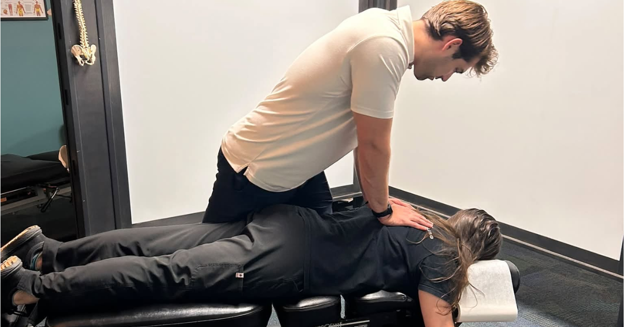
During the procedure, you will typically lie face down on a specialized, comfortable table designed to support the natural curves of your body. We use our hands or specialized, gentle instruments to apply a quick, controlled force to the misaligned vertebrae.
The process is highly controlled and customized to your comfort level. While you may feel a gentle stretching sensation, the procedure is typically quick and painless. Many patients report an immediate sense of relief and improved mobility right on the table.
What Are the Benefits of a Chiropractic Adjustment?
The benefits of correcting spinal alignment extend far beyond simple pain relief. By restoring joint mechanics, we help optimize your body's innate ability to heal and communicate.
| Benefit Category | Specific Physiological Impact |
|---|---|
| Joint Mobility | Restores natural range of motion and reduces stiffness. |
| Nerve Function | Decreases nerve compression to improve body communication. |
| Pain Management | Alleviates localized inflammation and muscular tension. |
| Structural Balance | Corrects postural habits and reduces joint wear and tear. |
The overall impact of these benefits includes reduced reliance on pain medications, improved sleep quality, a stronger immune system, and enhanced athletic performance. By keeping your spine aligned, your nervous system can transmit vital signals throughout your body without interference.
What Are the Side Effects or Complications of a Chiropractic Adjustment?
most patients, the side effects are very mild and temporary. You might experience some mild soreness, stiffness, or fatigue in the treated areas for 24 to 48 hours following your session, similar to the feeling you get after starting a new exercise routine.
Serious complications are exceptionally rare when the treatment is performed by a licensed, highly trained professional. We conduct thorough pre-treatment screenings to rule out contraindications, such as severe osteoporosis or advanced nerve compression, ensuring your care plan is completely safe for your unique physiology.
Conclusion
Achieving lasting wellness requires looking past temporary symptoms to find the true root cause of bodily discomfort. Through a professional, personalized chiropractic adjustment, you can restore your mobility, relieve chronic nerve pressure, and help your body function at its highest natural potential. At Standridge Clinic, we provide comprehensive, non-surgical spinal care to help you move freely and live comfortably without relying on invasive treatments.
Frequently Asked Questions
-
The sound you hear is completely normal and is known as cavitation. It occurs when a joint is gently opened, causing a rapid change in pressure within the joint capsule.
-
Generally, the process does not hurt. Most patients feel immediate relief or a pleasant release of pressure.
-
After your session, your body begins processing the structural changes. We recommend drinking plenty of water to flush out released toxins and keep your spinal discs hydrated.
-
Most mild soreness or stiffness resolves within 24 to 48 hours. Depending on the chronic nature of your condition, you may experience immediate improvements in your flexibility and comfort.
