
Upper Cervical Instability and Ehlers-Danlos Syndrome
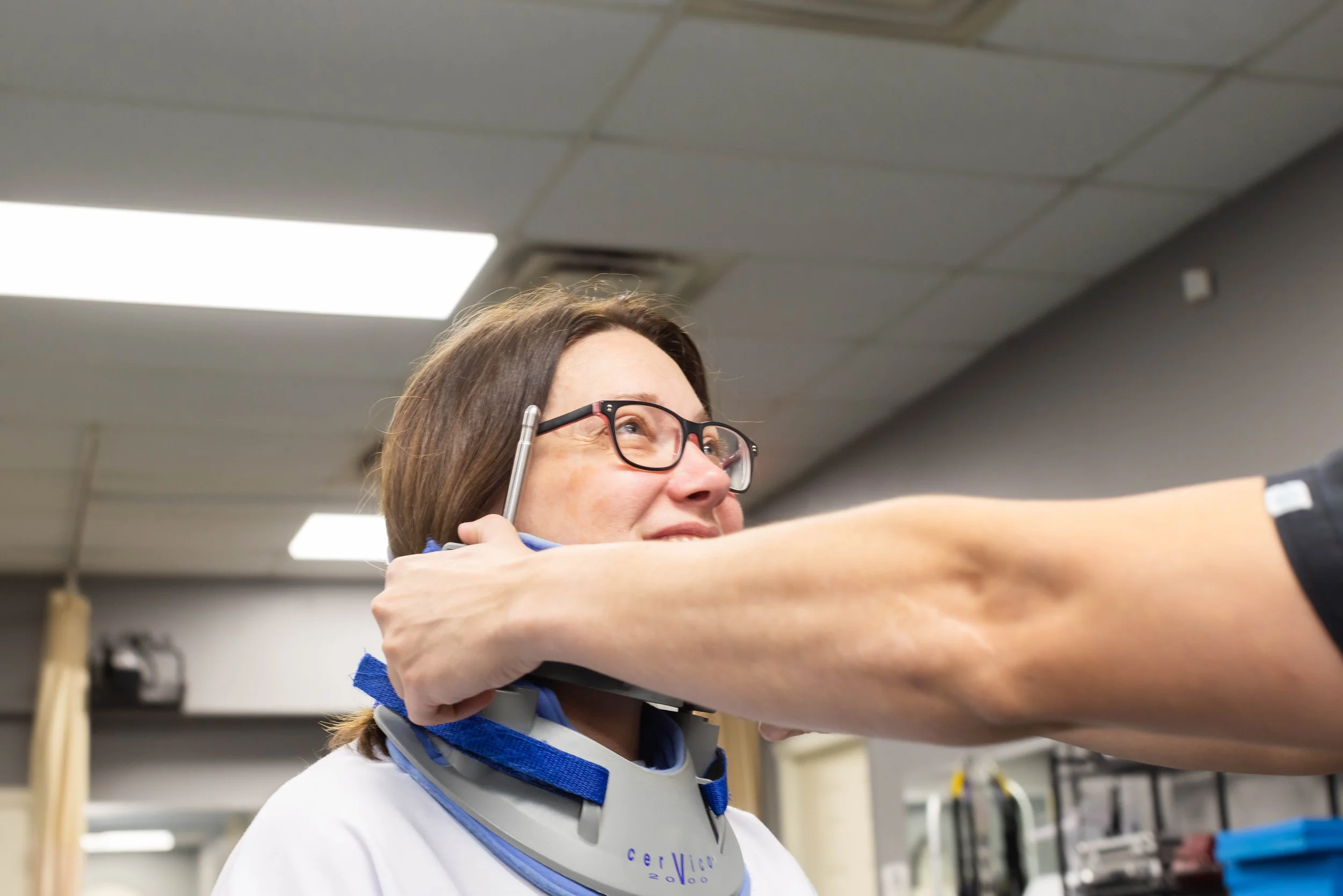
Your upper neck does a lot of work. The top two vertebrae, the atlas (C1) and axis (C2), hold up the weight of your head, let you turn it freely, and sit right next to the brainstem. That's a lot of responsibility for a small area, and it depends on strong ligaments to keep everything lined up.
For people with Ehlers-Danlos Syndrome (EDS), those ligaments can be looser than they should be. When they can't hold the joints steady, the bones in the upper neck may move more than they're meant to. That's what we mean by upper cervical instability.
Upper cervical instability may contribute to symptoms
Because this region protects the brainstem and carries the head, even a small amount of extra movement can cause outsized problems. People often describe:
Chronic headaches
Neck pain
Dizziness
Fatigue
Visual disturbances
Trouble concentrating
Balance issues
Many of these symptoms look like other conditions, which is part of why people go years without a clear answer.
The Connection Between CCI and EDS
Craniocervical instability (CCI) refers to excess movement where the skull meets the top of the spine. Ehlers-Danlos Syndrome is a group of connective tissue disorders, and connective tissue includes the ligaments that stabilize your neck. When that tissue is more elastic or fragile than normal, joints throughout the body can move too far. The neck is no exception.
Not everyone with EDS develops CCI, and not everyone with CCI has EDS. But the overlap is common enough that doctors who treat EDS pay close attention to the upper neck, especially when symptoms like headaches, dizziness and brain fog don't have another explanation.
Symptoms of CCI in EDS
Symptoms can build slowly, and they often come and go. Beyond the list above, people with EDS-related CCI may notice:
A heavy feeling in the head, or a need to support it with their hands
Pressure or pain at the base of the skull
Symptoms that get worse when looking up, down or turning quickly
Lightheadedness when standing or changing position
Ringing in the ears or a feeling of "fullness"
A sense that the neck "clunks" or gives way
Symptoms can also change through the day, flaring after long periods at a screen, in the car, or after exertion.
CCI in EDS vs. CCI in Non-EDS Patients
CCI doesn't always have the same cause.
In people without EDS, instability often follows a clear event: a car accident, a fall, a sports injury, or a condition that wears down the neck's supports, such as rheumatoid arthritis. Some people are also born with structural differences.
In people with EDS, instability tends to come from generalized ligament laxity. There may be no single injury to point to. It often builds quietly over time, and it frequently comes alongside other whole-body symptoms like joint hypermobility, fatigue, and trouble regulating heart rate or blood pressure. That's why a "one-size-fits-all" neck approach doesn't work well for this group, and why the care plan needs to look at the whole person.
Diagnosis of CCI in EDS
Getting a diagnosis can take persistence. Standard imaging is usually done lying still, and an unstable neck can look perfectly normal when it isn't moving.
That's where motion-based imaging helps. Digital Motion X-Ray lets us watch the spine move in real time while you go through gentle, guided motions. Seeing how the bones travel, rather than just where they sit, can reveal abnormal movement patterns in a region that's easy to miss on a still picture.
For many patients, seeing that movement finally confirms what they've suspected for years. A complete evaluation also includes your history, a physical and neurological exam, and, when needed, coordination with other specialists for additional imaging.
Treatment Options for CCI in EDS
Treatment depends on how severe the instability is and how much it's affecting you. Many people start with conservative care:
Gentle, targeted strengthening for the deep neck muscles
Posture and movement habits that reduce strain
Activity pacing and ergonomic changes
Temporary neck support in certain cases
Care that avoids forceful or high-velocity neck movements when instability is suspected
A small number of people with significant instability or neurological symptoms are referred to a surgeon to discuss stabilization. Your care team should walk you through which path fits your situation.
If you've been dealing with unexplained neck pain, headaches or dizziness, the team at Standridge Clinic in Owasso can help you find out what's behind it. Call (918) 272-7439 or schedule your visit online.
Frequently Asked Questions
-
Not always. Most MRIs are taken while you're lying still, and instability shows up when the neck moves. A normal scan means no structural problem was seen in that position. It doesn't completely rule out excess movement. If your symptoms point to CCI, ask whether motion-based or upright imaging makes sense.
-
No. Many people manage well with conservative care and lifestyle adjustments. Surgery is usually reserved for more serious instability, neurological symptoms, or cases where other approaches haven't helped.
-
Gentle, controlled work for the deep muscles at the front and back of the neck tends to be the most useful, along with posture and shoulder-stability exercises. Avoid aggressive stretching or heavy loading of the neck. Exercises should be guided by a professional who knows you have instability, since the wrong ones can make symptoms worse.
-
It varies a lot. The bones need several months to fuse, and many people notice gradual improvement over the following months. Some symptoms improve more than others, and recovery isn't the same for everyone. Your surgeon can give you a realistic timeline for your case.
-
It can contribute. EDS affects the connective tissue that holds joints in place, including the ligaments of the upper neck. Not everyone with EDS develops instability, but it's a known risk.
-
People describe a heavy head, pain or pressure at the base of the skull, dizziness, headaches, and a sense that their neck can't hold them steady. Symptoms often worsen with certain head positions or after long periods of activity.
-
Most neck pain isn't. Muscle strain, poor posture and joint irritation are far more common. Instability becomes more likely when neck pain comes with dizziness, visual changes, brain fog, balance problems, or a history of hypermobility or EDS. A proper evaluation is the best way to know.
